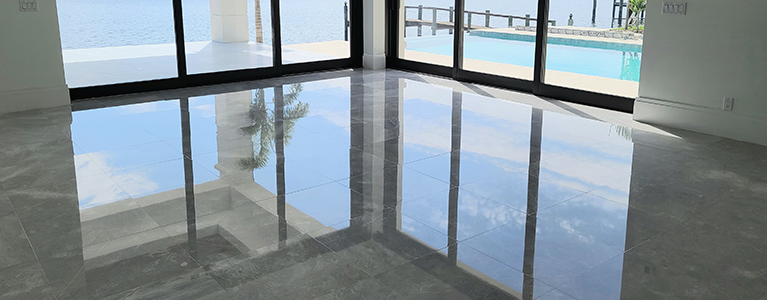
How Climate Impacts Marble Floors in Florida Homes
Florida is one of the most beautiful places in the country to live. It’s also one of the hardest on natural stone.
Marble floors are a popular choice in South Florida homes, and for good reason. They’re cool underfoot, visually stunning, and add real value to a property. But the same climate that makes this region desirable creates a unique set of challenges for marble that homeowners often don’t anticipate until the damage is already showing.
What Makes Florida’s Climate So Hard on Marble
Most stone care advice is written for temperate climates. Florida doesn’t fit that mold.
The combination of high humidity, intense heat, heavy rainfall, and year-round UV exposure puts marble under a kind of sustained stress that homeowners in other states simply don’t deal with. Each of these factors does something different to the stone, and together they accelerate wear significantly faster than normal aging would.
Humidity Is the Biggest Culprit
Marble is a porous material. It absorbs what it’s exposed to, and in South Florida, it’s exposed to moisture almost constantly.
High humidity means the air around your marble floors is perpetually damp. Over time, that moisture seeps into the stone and starts working from the inside. The result is discoloration, dark patches, and in some cases mold or mildew growth beneath the surface that no amount of surface cleaning will address.
This is especially common in bathrooms, kitchens, and any room without consistent air conditioning. Even homes that are well-cooled during the day see humidity levels rise overnight or when windows are open.
Heat Causes Expansion and Sealant Breakdown
Florida heat doesn’t just make summers uncomfortable. It puts physical stress on marble floors through a process called thermal expansion.
Stone expands slightly in heat and contracts when it cools. In a climate with dramatic temperature swings, especially in homes that alternate between heavy air conditioning and outdoor heat, that repeated movement can create microfractures over time. These aren’t always visible immediately, but they open pathways for moisture and contaminants to get deeper into the stone.
Heat also accelerates the breakdown of protective sealants. A sealant that might protect marble for two to three years in a cooler climate may need refreshing annually in a Florida home, particularly in rooms with direct sun exposure.
UV Exposure Fades and Weakens Stone
Sunlight is relentless in South Florida, and marble takes the hit.
UV rays don’t just fade the color of marble over time. They degrade the sealant layer that protects the surface from staining and moisture. Once that layer breaks down, the stone is exposed. Rooms with large windows, skylights, or sliding glass doors that face the sun are especially vulnerable.
Light-colored marble tends to show UV-related yellowing. Darker varieties may develop uneven fading. Either way, the damage compounds the longer it goes unaddressed.
Rain and Sand Add to the Problem
Outdoor marble surfaces face all of the above plus two additional threats specific to Florida living: heavy seasonal rain and sand.
Rainwater carries organic material and minerals that stain porous marble on contact. Outdoor patios, pool decks, and balconies that stay wet after storms are particularly at risk. Standing water is one of the fastest ways to introduce deep staining that can’t be cleaned from the surface alone.
Sand is an abrasive. In coastal areas especially, fine sand particles tracked across marble floors act like sandpaper on the finish over time. This is one of the reasons marble floors in Florida homes lose their polish faster than homeowners expect.
What Florida Homeowners Should Be Doing Differently
The standard advice for marble maintenance doesn’t go far enough for this climate. A few adjustments make a meaningful difference.
Sealing needs to happen on a shorter schedule than most product guidelines suggest. Getting the floor professionally sealed at least once a year, and more frequently in high-traffic or high-moisture areas, is the baseline for protecting marble in Florida conditions. Learn more about professional sealing and what it involves.
Cleaning matters too, but product selection is critical. Acidic cleaners, including many common household products, will etch marble on contact. pH-neutral cleaners designed specifically for natural stone are the only safe option. Regular professional cleaning removes buildup that routine mopping leaves behind.
And when damage is already visible, waiting makes it worse. Scratches, etch marks, dull spots, and discoloration don’t resolve on their own. The sooner restoration happens, the less invasive the process needs to be.
When It’s Time to Call a Professional
If your marble floors have lost their shine, developed uneven coloring, or show any signs of etching or staining, cleaning won’t bring them back. That requires professional restoration.
At Just Call Classic, we’ve been maintaining and restoring marble floors in South Florida homes since 1997. We understand exactly what this climate does to natural stone and how to address it properly. Our team handles everything from routine maintenance to full restoration, and we work with all marble types and finishes.
We serve Broward, Dade, and Palm Beach counties. If your floors need attention, we’re here to help.
Call us today at (954) 578-3600 for a free consultation.